
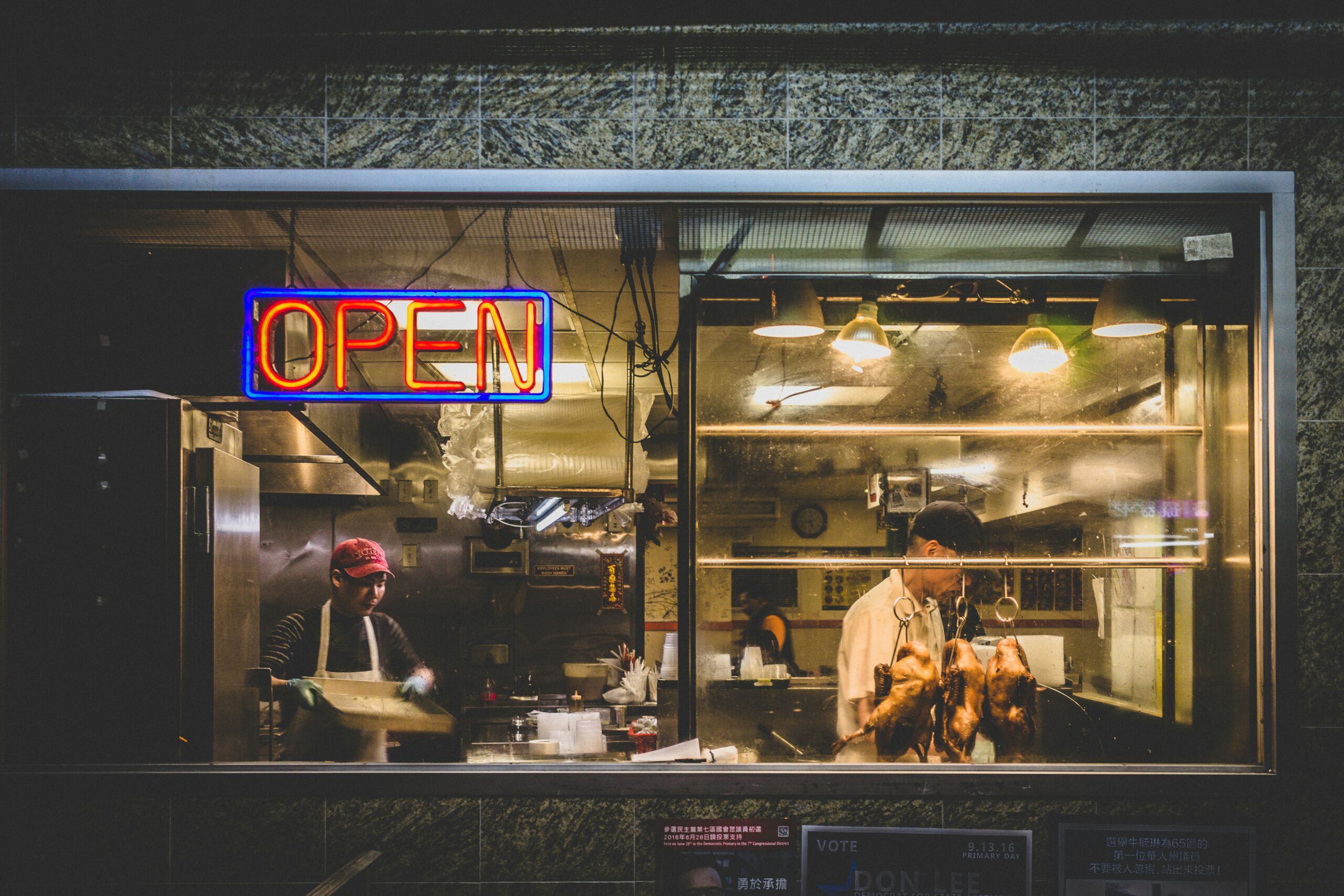
Photo By Khachik Simonian
A franchised restaurant can have great food and a great location, and still lose the battle for attention if customers do not recognize the name, trust the experience, and feel confident walking through the door.
BRAND RECOGNITION IN FRANCHISED RESTAURANTS: THE REAL ENGINE BEHIND TRUST, TRAFFIC, AND REPEAT SALES
Brand recognition is not a logo on a sign; it is a shortcut in the customer’s brain. In a world where people make dining decisions fast, a recognized brand reduces uncertainty. It signals consistency, it hints at quality, it suggests the experience will match expectations. That is why recognition is not cosmetic; it is operational. It is the compounding asset that makes every marketing dollar, every local event, every online review, and every guest interaction work harder.
There is a reason familiar brands win the first click and the first visit. In Nielsen research on consumer decision making, nearly six in ten respondents said they prefer buying new products from brands familiar to them. That preference exists because familiarity feels safer, and safety influences choice. In restaurants, that same instinct shows up as, “I know that name,” or, “I have heard of that place,” which often becomes, “Let’s go there.”
For franchised restaurants, brand recognition is also the glue that holds the system together. It protects the brand promise across neighborhoods, cities, and states. It gives franchisees a stronger opening day. It gives recruiting an advantage. It raises the ceiling on unit sales when the brand becomes a default option in the market rather than a newcomer fighting for permission.
Recognition is built in moments, not slogans
Most brands try to build awareness with noise. The better move is to build recognition through repetition and proof.
Repetition is how customers remember you. Proof is why they trust you.
Repetition comes from consistent brand standards, consistent menu execution, consistent tone of voice, and consistent service rhythm. Proof comes from customer experience and online reviews, from local visibility, from the way a brand shows up in the community, and from the discipline to protect standards even when it is inconvenient.
That is why brand consistency matters more than creativity. A franchise system does not need every operator to be a marketing genius. It needs every operator to deliver a recognizable experience, every time, for every guest.
The modern path to recognition runs through local search and reputation
If brand recognition used to be built mainly through billboards and radio, today it is built through the customer’s phone. Your restaurant brand strategy has to win the moment someone searches “best lunch near me,” checks ratings, reads a few reviews, and decides in seconds.
In a Toast survey about restaurant feedback and reviews, 94 percent of respondents said online reviews influence where they eat. That is not a small edge. That is the game.
This is where local SEO becomes a profit lever, not a technical detail. A franchised restaurant can have national awareness, but still lose locally if listings are messy, hours are wrong, photos are outdated, or reviews are unanswered. Recognition fades when customers encounter friction. They move on.
High performing multi location brands treat local marketing as a system, not an afterthought. BrightLocal research found that 94 percent of high performing multi location businesses have a dedicated local marketing strategy. In plain English, the strongest brands do not rely on hope. They operationalize visibility.
The franchise advantage, when it is used correctly
A franchise has structural benefits in building brand awareness, but only if the system does its job.
A strong franchisor creates scalable marketing assets, clear playbooks, brand approved content, and training that makes execution easier for operators. A strong franchisee brings local energy, community presence, and daily operational excellence. When those two roles align, brand recognition accelerates.
Here is what that alignment looks like in practice.
First, nail the fundamentals of restaurant marketing. Guests need to see the brand often enough to remember it and experience it consistently enough to trust it. That is not one campaign; it is a rhythm.
Second, treat social media marketing for restaurants like a local relationship tool, not a vanity project. The goal is not random views; the goal is familiarity in your trade area. Familiarity turns into visits, visits turn into reviews, reviews turn into momentum.
Third, build a loyalty flywheel. A customer loyalty program is not only about discounts. It is a reason to return, a reason to identify with the brand, and a reason to choose you when competitors are also one tap away. Loyalty is where recognition becomes revenue.
Fourth, own customer experience as the core marketing channel. You can buy attention, but you cannot buy reputation. Your service speed, cleanliness, hospitality, and food consistency are what guests talk about. Recognition grows when guests repeat your name to someone else, without being prompted.
Fifth, protect franchise marketing discipline. Recognition collapses when operators improvise the brand. A franchised restaurant wins when the guest experience feels familiar in the best way, reliable, predictable, and worth repeating.
The takeaway
Brand recognition is not something you hang on the wall; it is something you earn through consistency, reputation, and local presence. In franchised restaurants, it is a strategic imperative because it multiplies the impact of every other effort. It makes your ads convert better. It makes your hiring easier. It makes your openings stronger. It makes your customer acquisition cheaper over time, because familiarity does the work before the customer even arrives.
If you want a scalable system, treat recognition as a measurable operating goal. Track your review volume and rating trends. Track branded search in your market. Track repeat visits and loyalty engagement. Track local listing health. Build habits that make your brand easier to remember and trust.
That is how a name becomes a destination.
Sources used
- Nielsen, “Looking to Achieve New Product Success? Listen to Your Consumers” (Global New Product Innovation Report, June 2015) https://nourisheu.com/wp-content/uploads/2016/01/Nielsen-Global-New-Product-Innovation-Report-June-2015.pdf
- BrightLocal, “Brand Beacon Report 2024, Benchmarking Local Marketing Excellence for Multi location Brands” https://www.brightlocal.com/research/brand-beacon-report/
- BrightLocal, “Benchmarking Local Marketing Excellence for Multi location Brands” (PDF) https://www.brightlocal.com/wp-content/uploads/2024/03/BrightLocal-Brand-Beacon-Report-2024.pdf
- Toast, “What Motivates Guests to Give Restaurant Feedback and Reviews in 2025” https://pos.toasttab.com/blog/data/restaurant-feedback-insights
This article was researched, outlined and edited with the support of A.I.