
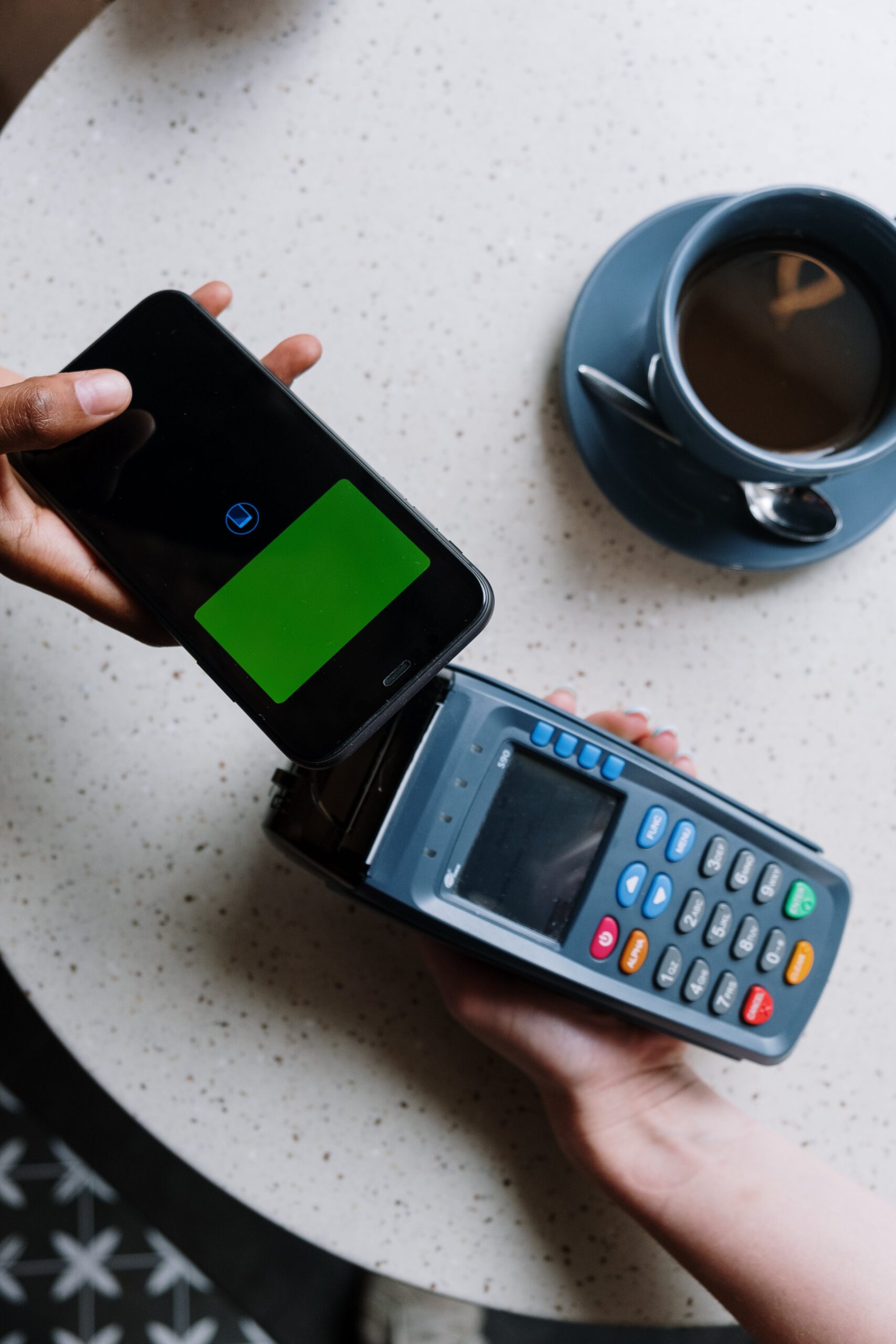
Photo By Cottonbro Studio
Technology does not scale a franchise by itself. What scales is consistency, speed, and decision quality, repeated across every location. The right tech stack turns brand standards into daily behavior, protects margins, tightens execution, and makes growth easier to govern.
FRANCHISE GROWTH AT SCALE IN 2026: HOW NEW TECHNOLOGIES STRENGTHEN MULTI LOCATION, MULTI BRAND OPERATIONS
The franchise industry is not being reshaped by a single tool. It is being reshaped by an operating reality: brands are expected to deliver the same experience everywhere, while labor is tight, supply chains are volatile, and guests demand convenience on their terms. Technology has become the connective tissue that allows a brand to protect consistency, raise unit level performance, and expand without letting complexity win.
The most important shift is this. Technology is no longer just a collection of gadgets and apps. It is the system that ties together brand standards, training, inventory, marketing, service speed, guest feedback, cybersecurity, and reporting. When done well, it creates clarity. When done poorly, it creates noise, extra steps, and frustration.
Below are the technologies genuinely moving the needle for franchises with multiple locations and brands, along with practical ways to think about them so they improve the business rather than distract from it.
Cloud infrastructure as the foundation for consistency
The first job of technology in franchising is not to look modern. It is to create a single version of the truth across the organization. Cloud platforms make that possible by centralizing data and workflows so every location operates from the same playbook, with the same reporting language, and the same visibility.
That matters because multi location growth creates a familiar problem: local decisions multiply faster than leadership can monitor them. Cloud based systems help franchisors and franchisees see performance in real time, compare locations fairly, and correct issues before they become habits.
The National Restaurant Association reports that most operators see technology as a competitive advantage, but many also believe they are not keeping up, which reinforces the need for a clear, intentional tech foundation rather than random add ons.
The practical takeaway is simple. Before chasing advanced tools, make sure the basics are unified: point of sale data, labor data, inventory data, and financial reporting. Without that spine, every advanced feature becomes harder to implement and harder to trust.
AI that improves execution, not just marketing
AI is no longer theoretical in restaurants. It is showing up in customer experience, inventory planning, and operations. Deloitte research highlights widespread day to day use of AI in customer experience, and also points to inventory management as a meaningful use case.
What does this look like inside a franchise system?
- More relevant guest outreach
AI can tailor offers based on behavior, timing, and preferences, raising conversion without discounting everything. - Smarter forecasting
Demand forecasting improves ordering, reduces waste, and helps labor scheduling match traffic patterns. Better forecasting does not require perfect prediction. It requires fewer surprises and faster adjustment. - Better decision support for operators
AI can surface anomalies and patterns that humans miss, especially when leadership is overseeing dozens or hundreds of locations.
There is also a major signal coming from large restaurant operators. McKinsey recently profiled how the Flynn Group is testing AI tools aimed at transforming both restaurant operations and the customer experience. This matters because large operators tend to invest where they see scalable value, not novelty.
On the consumer side, major brands are public about these moves. Reuters reported that Papa Johns expanded its partnership with Google Cloud to use AI for personalization, chatbots, and operational improvements like routing and inventory support.
The practical takeaway: AI should be judged like any other operational investment. It must show measurable impact on ticket size, frequency, labor efficiency, food cost control, speed of service, guest satisfaction, or franchisee profitability. If it cannot, it is a distraction.
Mobile ordering, loyalty, and frictionless payment
For many franchise brands, the biggest technology gains come from removing friction. Guests want faster ordering, easier payment, and predictable convenience. The National Restaurant Association technology research points to ordering and payment convenience as a top customer preference.
This is not just about apps. It is about designing an experience that works across channels: in store, drive thru, pickup, delivery, and catering. When mobile ordering and loyalty are integrated properly, a franchise system benefits in four ways:
- Higher frequency through loyalty nudges that feel relevant
- Better data to understand customer behavior by region and daypart
- Improved labor planning because demand becomes more visible
- Higher consistency because order flow can be standardized
The key is integration. If the loyalty platform, ordering platform, and POS do not talk to each other cleanly, the guest experience breaks and franchisees lose confidence.
IoT for food safety, uptime, and margin protection
The Internet of Things is not a buzzword in restaurants. It is a way to protect food safety, reduce downtime, and limit product loss. Temperature monitoring, equipment performance tracking, and automated alerts reduce the chance of expensive failures.
This ties directly to unit economics. A single cooler failure can wipe out a week of profit. IoT sensors that alert leadership early are not glamorous, but they save real money and protect the guest experience.
Technology also intersects with the regulatory environment. The FDA emphasizes traceability as a public health priority through FSMA Section 204 requirements for additional records for certain foods. Even when a restaurant is not directly managing complex manufacturing processes, the direction of travel is clear: better records, faster traceability, tighter controls.
The practical takeaway: for multi unit operators, IoT is often a high return investment because it prevents losses that are otherwise invisible until after the damage is done.
VR and AR for training that actually sticks
Training is one of the hardest scaling problems in franchising. The larger the system, the more training quality varies. That variation becomes brand drift.
VR and AR create a solution: repeatable training experiences that do not depend on the personality, skill, or patience of a single trainer. VR can simulate guest interactions, safety scenarios, and operational workflows. AR can support real time job guidance in the field, helping team members follow correct steps during busy shifts.
PwC research found VR learners completed training faster than classroom learners, and also reported greater emotional connection to the content, which is often what drives retention and behavior change.
The practical takeaway: immersive training is not about entertainment. It is about repeatable reps. It turns training into practice, not just instruction.
Blockchain and digital traceability for modern supply chains
Franchise brands do not grow by finding one supplier. They grow by building a repeatable supply chain structure that can expand into new markets while holding quality steady.
Blockchain is one emerging tool in this area because it can improve transparency and traceability, especially when multiple parties touch the product. The World Economic Forum highlights blockchain as a way to enhance traceability in food supply chains.
Not every franchise system needs blockchain today, but the concept matters: the future belongs to systems that can prove what they buy, where it came from, and how it moved. That protects brand trust and reduces risk.
Automation that cleans up the back office
Franchise growth creates paperwork, reconciliation, and repetitive tasks that steal time from leadership. Robotic process automation can handle rule based work like data entry, invoice matching, and process routing, which reduces delays and errors.
For franchisees, back office automation can mean cleaner books and faster visibility into the numbers. For franchisors, it can mean more reliable reporting, fewer support tickets, and better compliance.
The practical takeaway: automate what is repetitive so humans can focus on leadership, coaching, and execution.
5G as an enabler for real time operations
5G is not a restaurant strategy by itself. It is an enabler of everything that depends on speed and connectivity: IoT sensors, mobile experiences, AR training tools, and real time analytics.
Verizon outlines 5G advantages for IoT including low latency and support for large device density, which matters as more equipment becomes connected. The standards bodies behind 5G also emphasize ultra reliable low latency communications as a core direction of development.
The practical takeaway: for multi location systems, better connectivity reduces downtime, improves data freshness, and makes advanced tools more realistic.
The real strategy: build a franchise technology operating system
The winning franchise brands will not be the ones with the most tools. They will be the ones with the cleanest operating system.
That operating system includes:
- A clear tech stack with defined ownership and governance
- Vendor standards that reduce complexity for franchisees
- A data strategy that creates one source of truth
- Training that drives adoption, not just awareness
- Measurement that ties technology to unit economics
If the tech stack does not improve unit level profitability and brand consistency, it will eventually be rejected by the field, even if it looks impressive at headquarters.
Conclusion
Technology is accelerating franchise growth, but the real impact is deeper than speed. It is about control without rigidity, consistency without stagnation, and insight without overwhelm.
Cloud platforms unify the system. AI improves decisions and personalization. Mobile tools reduce friction. IoT protects food safety and uptime. VR and AR strengthen training. Blockchain improves traceability. RPA removes back office drag. 5G connects it all faster.
For franchise brands that want to scale responsibly, the question is not whether to adopt technology. The question is which technologies build a stronger system, and which ones simply add noise.
Sources used for research
- Restaurant Technology Landscape Report 2024, National Restaurant Association
https://restaurant.org/research-and-media/research/research-reports/2024-technology-landscape-report/ - Restaurant Technology Landscape Report 2024 PDF, National Restaurant Association
https://go.restaurant.org/rs/078-ZLA-461/images/NatRestAssoc_TechLandscapeReport_2024.pdf - How AI is revolutionizing restaurants, Deloitte Insights
https://www.deloitte.com/us/en/insights/industry/retail-distribution/ai-in-restaurants.html - Restaurant AI investments heat up, but adoption varies, Deloitte press release
https://www.deloitte.com/us/en/about/press-room/deloitte-how-ai-is-revolutionizing-restaurants.html - How the world’s largest restaurant franchise operator uses AI, McKinsey
https://www.mckinsey.com/industries/retail/our-insights/how-the-worlds-largest-restaurant-franchise-operator-uses-ai - PwC study into the effectiveness of VR for soft skills training
https://www.pwc.co.uk/services/technology/immersive-technologies/study-into-vr-training-effectiveness.html - PwC virtual reality study, Tech Effect US
https://www.pwc.com/us/en/tech-effect/emerging-tech/virtual-reality-study.html - Papa Johns wants AI to transform pizza ordering, Reuters
https://www.reuters.com/technology/artificial-intelligence/papa-johns-wants-ai-transform-pizza-ordering-2025-04-03/ - From source to stomach, how blockchain tracks food supply chains, World Economic Forum
https://www.weforum.org/stories/2024/08/blockchain-food-supply-chain/ - FSMA Final Rule on Requirements for Additional Traceability Records for Certain Foods, FDA
https://www.fda.gov/food/food-safety-modernization-act-fsma/fsma-final-rule-requirements-additional-traceability-records-certain-foods - What is Robotic Process Automation, UiPath
https://www.uipath.com/rpa/robotic-process-automation - Advantages of 5G for IoT solutions, Verizon Business
https://www.verizon.com/business/answers/what-are-the-advantages-of-5g-for-iot-solutions/ - Ultra reliable and low latency communications, 3GPP
https://www.3gpp.org/technologies/urlcc-2022
This article was researched, outlined and edited with the support of A.I.