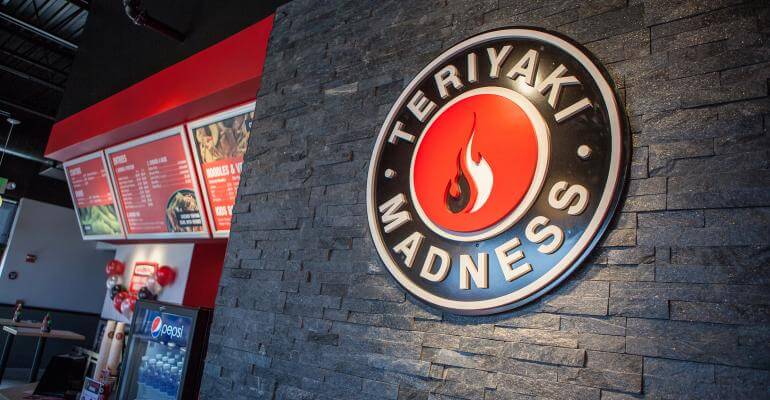
Photo By Teriyaki Madness
BUILDING INTERNAL TEAMS THAT SCALE: HOW FRANCHISORS SUPPORT PROFITABLE GROWTH
By Michael Haith – Chairman & CEO of Teriyaki Madness,
Growth is exciting. Growth is validating. Growth is also where franchise systems can break.
Adding units without strengthening internal infrastructure strains field teams, frustrates franchisees, and erodes brand standards. According to the International Franchise Association (IFA), franchising continues to expand steadily across the U.S., with thousands of new units projected annually, as reported in its Franchising Economic Outlook. Systemwide growth is healthy, but healthy growth requires healthy internal teams.
For franchisors, the real question is not “How fast can we grow?” It’s “Do we have the team to support the growth we are selling?”
After nearly three decades in franchising as a franchisee, franchisor, and investor, and building Teriyaki Madness from seven units to more than 200 locations, I can say with certainty:
The team is everything.
Start With the Right Philosophy: Support Is the Product
Franchisees do not just buy a brand. They buy support.
At Teriyaki Madness, our corporate team is tasked with training, supporting, managing, mentoring, and encouraging aspiring and often first-time business owners to achieve their goals.
From day one, we invested in hiring the best people we could find, individuals who brought proven systems and processes from other restaurant franchise systems, matched our work ethic, and reflected our culture of caring, accountability, and execution.
Young companies tend to favor flat hierarchies. But as organizational size grows, clear lines of accountability and authority become essential. Today, we have 61 team members supporting approximately 200 franchisees. Everyone understands their position, responsibilities, and how to work with and respect one another.
Structure does not limit culture. It protects it.
Hire People, Not Positions
One of the biggest mistakes franchisors make during expansion is hiring reactively and narrowly, filling roles after cracks in support begin to show.
We take the opposite approach.
We hire ahead of the need. We invest in people, not just positions. Great people do what is needed first, then naturally specialize in their strongest skill sets over time.
This forward investment requires discipline. In our early years, capital was the bottleneck. Every dollar of profit went back into hiring. I personally relinquished my own salary for the first four years to ensure we could build the right infrastructure.
Getting behind on hiring or cutting corners on quality is not fair to franchisees. It leads to overworked support teams, slower response times, and declining morale. That ultimately shows up in unit economics. Scaling responsibly means building excess capacity before feeling strained.
Install Accountability Systems Early
Good intentions do not scale. Systems do.
We use the Entrepreneurial Operating System (EOS) to document deliverables and create structured accountability. Clear expectations. Clear ownership. Clear follow-through.
EOS helps organizations clarify vision, strengthen leadership teams, and drive consistent execution. In a franchise system, that consistency is critical because variability multiplies across locations.
Accountability must be systemic, not personality-driven. When deliverables are documented and measurable, teams execute with confidence. When they are vague, support becomes subjective and inconsistent.
Culture Is Not a Slogan, It Is the Operating System
Culture cannot be artificially manufactured. Culture is the zeitgeist of the brand, the business, and the community. It reflects the ownership’s values and beliefs.
At Teriyaki Madness, our culture centers around profitability, trust, and franchisee satisfaction. That cultural alignment drives how we hire, how we coach, and how we measure success.
The U.S. Small Business Administration notes that strong management teams and clearly defined operational processes are among the top predictors of small business success. In franchising, that principle doubles because internal teams shape the success of dozens or hundreds of independently owned businesses.
If internal culture does not reflect accountability and execution, franchisees will feel that.
Build for Multi-Unit Readiness From Day One
If the goal is multi-unit growth, and for most franchisors it is, then internal teams must develop shop-level leaders who operate independently.
We do this by treating people with respect and providing opportunities. Leaders step forward. They grab the opportunity and prove themselves capable.
That philosophy applies at both the corporate and shop levels. What makes a model conducive to multi-unit growth?
- Strong unit-level profitability
- Trust between franchisor and franchisee
- Consistent satisfaction across the system
When those fundamentals are present, expansion becomes an operational decision, not a leap of faith.
The IFA’s 2024 Franchisor Survey Report indicates that labor constraints and operational complexity remain top concerns among franchisors. Systems that proactively invest in leadership development and operational support are better positioned to offset those pressures.
Multi-unit growth does not happen because more territories are awarded. It happens because internal teams have the depth and experience to support the expansion of operations without lowering standards.
Know When You Are Ready for the Next Opening
We have always invested in the team far in advance of new openings. The question is never “Can we push through one more?” It is “Will this be fair to our franchisees and employees?”
With little exception, franchisees entering the system provide us a 9-12 month window before opening. That runway allows us to forecast workload and hire accordingly. Existing franchisees pursuing additional locations are factored in the same way.
We’re constantly testing new support initiatives. We listen, we observe, we hypothesize, we test, test again, and then we execute relentlessly with analytics.
Support functions must improve franchisee performance. If they do not move the needle on profitability, efficiency, or satisfaction, they should be refined.
Franchisors sometimes believe they must slow development to strengthen infrastructure. In our case, we have chosen to evolve as we grow. Professional teams can multitask. We learn from franchisees as much as they learn from us. The system is constantly improving.
The key is disciplined investment, not reactive correction.
The Scalability Advantage: Timing Matters
Every concept has a lifecycle.
In our case, we have proven the business model across multiple regions of the United States, and the growth opportunities remain significant. However, that will not always be true.
Scaling responsibly means understanding market timing while simultaneously strengthening internal infrastructure. Expansion without infrastructure erodes trust. Infrastructure without expansion misses opportunity. The balance is leadership’s responsibility.
Final Takeaway for Franchisors
If you want to scale responsibly:
- Hire ahead of the need
- Build accountability systems early
- Protect culture intentionally
- Develop independent leaders at every level
- Measure support effectiveness through real analytics
- Invest profits back into infrastructure
Sustainable growth comes from building capability alongside new units. When your internal team is structured correctly, franchisees feel supported. When franchisees feel supported, they expand. When they expand profitably, your system strengthens.
The team is not overhead. The team is the engine.
Sources:
- International Franchise Association, 2025 Franchising Economic Outlook — projections on unit and economic growth across U.S. franchising.
- International Franchise Association, 2024 Franchisor Survey Report — franchisor-reported operational and labor challenges.
- U.S. Small Business Administration, Building a Management Team guidance — management structure and operational best practices.
- Entrepreneurial Operating System (EOS), framework overview — structured accountability and leadership alignment methodology.
About Michael:
Michael Haith is Chairman and CEO of Teriyaki Madness, one of the fastest‑growing fast casual restaurant franchises in the U.S. With nearly 30 years of experience as a franchisee, franchisor, and investor, he brings a rare 360‑degree perspective to building scalable franchise systems. Haith previously led the expansion of Maui Wowi Hawaiian Coffees & Smoothies from a single unit to nearly 500 locations, and later helped guide Doc Popcorn through its acquisition by Dippin’ Dots. He founded Franchise Sherpas and Raintree Franchise Growth to support emerging franchisors and discovered Teriyaki Madness when it had just seven locations. Since taking full ownership in 2016, Haith has grown the brand to more than 200 locations, with hundreds more in development, driven by a focus on strong unit economics and full-service franchisee support.
* This blog is user-generated content.