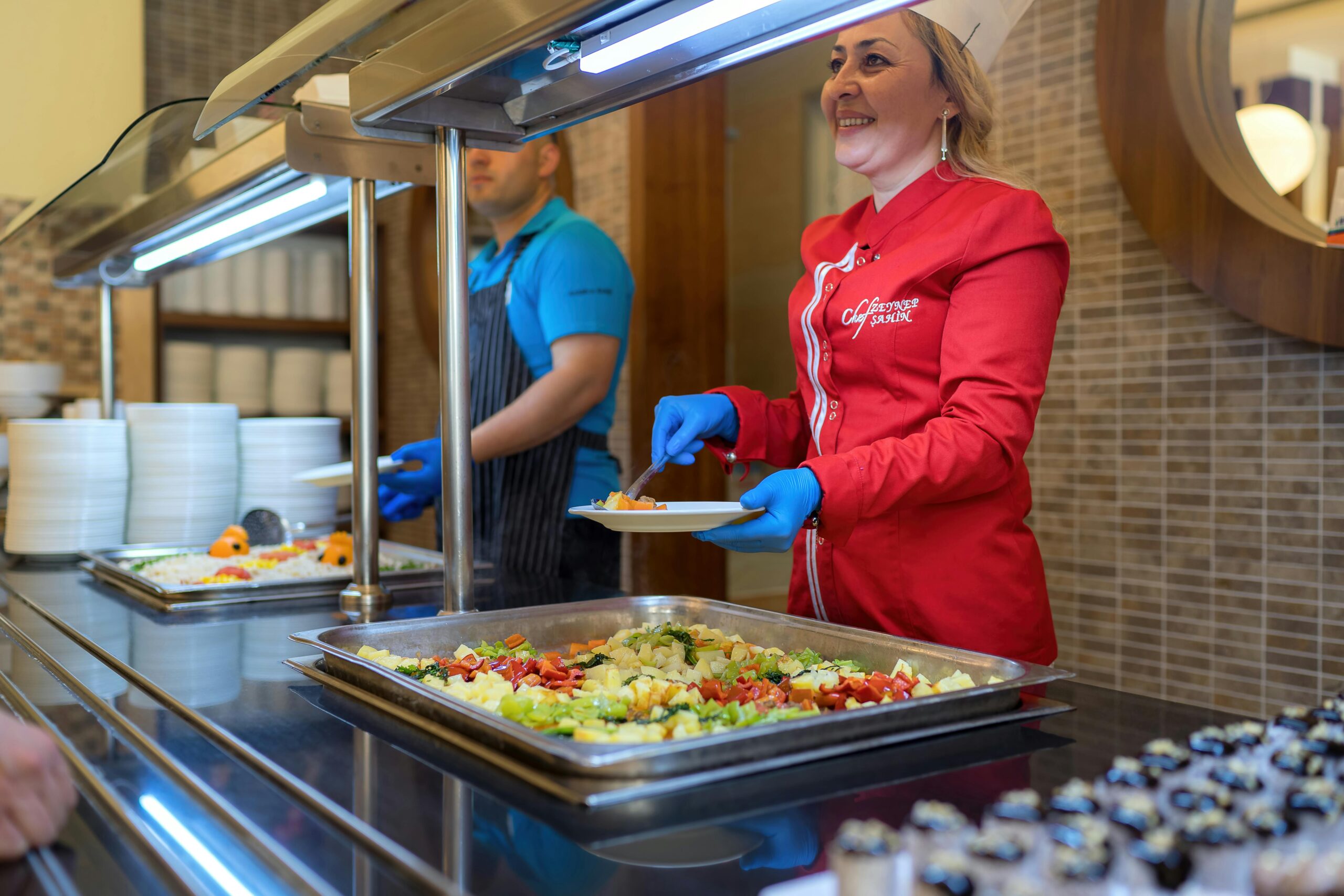
Photo By Kadir Guney
Growth looks great on paper. New markets, new franchisees, new momentum. But there is a point where expansion stops being progress and starts creating stress inside the system. In quick service and fast casual franchising, that breaking point is almost always tied to one thing: the supply chain. When it works, nobody talks about it. When it doesn’t, everything else begins to unravel.
WHY SUPPLY CHAIN STRATEGY DETERMINES SUCCESS OR FAILURE IN QUICK SERVICE AND FAST CASUAL FRANCHISING
By The Franchise Growth Solutions “Think Team”
The System Behind the System
Most people in franchising spend their time thinking about development, marketing, and deal flow. That makes sense. Those are the visible levers. They are also the exciting ones.
Supply chain is different. It is quieter. Less visible. And far less forgiving. In a restaurant franchise, every promise made to a customer ultimately runs through the supply chain. The food quality, the consistency, the speed of service, even the margins, they all depend on how well products are sourced, moved, and delivered.
When that system is tight, a brand can scale with confidence. When it is not, growth starts to expose weaknesses that were easy to ignore at a smaller size.
Growth Is Easy. Scaling Is Not.
A pattern shows up again and again, especially with emerging brands. A concept gains traction in its home market. Unit economics look strong. Franchise interest picks up. Then comes the decision to expand outward, sometimes aggressively.
On paper, it checks out. A new territory. A capable operator. A signed agreement. But here is what often gets missed. Supply chains do not scale based on enthusiasm. They scale based on volume and geography. Opening a unit, or even a handful of units, in a market far removed from the brand’s core operating region introduces friction almost immediately. Not always on day one, but it shows up. And when it does, it tends to show up in the numbers.
Distance Is Not the Problem. Density Is.
It is easy to blame distance. That is only part of the story. The real issue is density.
Distribution systems are built to move product efficiently when demand is sufficient to justify the investment. Without that demand, everything becomes more complicated and more expensive. A single unit in a distant market does not create meaningful case movement. Neither do two or three units spread across a large region. From a distributor’s standpoint, that volume barely registers.
The result is predictable.
Franchisees in those markets begin to deal with:
- Higher food costs
- Added freight and delivery charges
- Limited availability of proprietary items
- Longer lead times
- Inconsistent inventory
None of these issues exist in isolation. They stack.
How Broadline Distributors Actually Operate
Companies like Sysco and US Foods are not designed to carry every product for every brand in every market. Their model is built around movement.
If a product moves consistently, it earns space in the warehouse. If it does not, it becomes a special order or disappears from that region altogether. That distinction matters more than most franchisors realize.
A proprietary sauce or a specific protein cut might be easy to source in the brand’s home market, where dozens of units are ordering it every week. Move that same product into a new market with minimal unit presence, and the equation changes. Now it is a low volume item.
Low volume items come with consequences:
- They are not stocked locally
- They require special ordering
- They carry higher per unit costs
- They often involve additional freight charges
From the franchisee’s perspective, this is not a minor inconvenience. It directly impacts profitability
The Risk of Building a Brand on Proprietary Inputs
Strong brands often rely on proprietary ingredients. That is part of what makes them distinctive.
Signature sauces, unique seasoning profiles, branded packaging. These elements create consistency and recognition. They are valuable. They also create dependency. When those inputs are not readily available across all operating markets, the system begins to strain. Franchisees are left trying to reconcile brand standards with operational reality.
That usually leads to one of three outcomes:
- They absorb the higher cost and accept thinner margins
- They look for local substitutes and risk inconsistency
- They adjust the menu, which weakens the brand
None of these are good options.
When Unit Economics Start to Drift
Here is where it becomes more than an operational issue.
Small increases in cost, spread across multiple categories, can quietly erode unit-level performance. A few extra points on food cost. A delivery fee here. A rush order there. Over time, those adjustments add up. Operators in core markets often do not feel this. Their supply chain is efficient. Their costs are predictable. Operators in outlying markets are playing a different game entirely. Same brand. Same menu. Different economics. That gap creates tension. It also creates risk.
What This Looks Like in the Real World
It usually starts subtly.
A franchisee mentions that a key item is arriving late. Another notes that pricing has increased on a core ingredient. Someone else flags that they are being asked to order larger quantities than they can reasonably use. Individually, these issues seem manageable. Collectively, they point to a system that is out of alignment. Left unaddressed, they force decisions that no brand wants to make. Menu adjustments. Supplier exceptions. Temporary fixes that become permanent workarounds. At that point, the brand is no longer operating from a position of strength. It is reacting.
The Brands That Get This Right
The more disciplined franchise systems take a different approach. They do not chase geography. They build density. Instead of planting isolated units across multiple regions, they focus on developing clusters. Enough locations in a defined area to create meaningful demand within the supply chain. That changes everything.
- Higher case movement leads to better pricing.
- Better pricing improves unit economics.
- Stronger unit economics support further growth.
It becomes a reinforcing cycle instead of a fragile one.
Building Infrastructure Before You Need It
At some point, every growing brand faces the same reality. If you want to expand beyond your core market, your supply chain has to evolve. That might mean working with regional distributors. It might mean establishing relationships with co-packers closer to new markets. In some cases, it requires rethinking how proprietary products are produced and distributed.
None of this happens overnight. It takes planning. It takes capital. It takes a willingness to slow down expansion in order to build something that can actually support it. That tradeoff is where many brands hesitate.
The Discipline to Say Not Yet
There is always pressure to grow. Franchise interest creates momentum. Momentum creates expectations. It is tempting to say yes to every qualified candidate in every attractive market. But not every opportunity should be pursued immediately. A better question to ask is simple. Can the system support this market properly today? Not eventually. Not after a few more units. Today. If the answer is unclear, that is usually your answer.
Conclusion: Growth That Holds Together
In quick-service and fast-casual franchising, the supply chain is not a secondary concern. It is the foundation that everything else sits on. Expansion without supply chain alignment does not fail all at once. It fails gradually. Costs creep up. consistency slips. franchisees feel it first, then the brand feels it.
The strongest systems understand this early. They build markets, not just locations. They create density before chasing distance. They invest in infrastructure before it becomes urgent.
Growth is not the goal. Sustainable growth is. And that only happens when the supply chain can carry the weight of the brand.
© Copyright Gary Occhiogrosso – All Rights Reserved Worldwide
Sources
National Restaurant Association
https://restaurant.org
Food Institute
https://foodinstitute.com
Sysco
https://www.sysco.com
US Foods
https://www.usfoods.com
IBISWorld Industry Reports
https://www.ibisworld.com
McKinsey and Company, Supply Chain Insights
https://www.mckinsey.com
Deloitte Supply Chain and Operations
https://www2.deloitte.com
Technomic Foodservice Research
https://www.technomic.com
This article was researched, outlined and edited with the support of A.I.